Digital twins are rapidly moving from buzzword to boardroom priority across the aviation industry. For airports, the appeal is clear: a dynamic, 3D representation of infrastructure and operations that can improve decision-making, from managing passenger flow to preparing for advanced air mobility. Yet for many, digital twins still feel complex and undefined. The challenge is no longer recognizing their potential — it’s identifying and delivering tangible value.
Start With Outcomes, Not Data
A common misstep is collecting vast amounts of data without a clear purpose. While the urge to “capture everything” is understandable, managing data across thousands of assets, from light switches to structural systems, can quickly become costly and unmanageable.
Instead, digital twin strategies should be anchored in outcomes and return on investment. Ask questions such as: What problems are we solving? What decisions will this data improve? Focusing on high-value use cases positions digital twins as a tool for action, not just a repository.
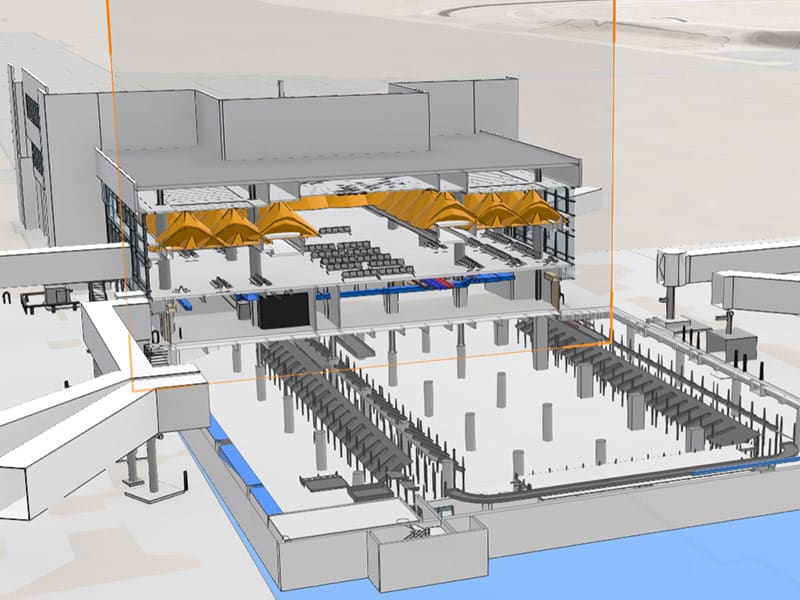
In the aviation digital twin ecosystem, priority should be given to critical assets such as runways, taxiways, airfield lighting, navigational aids, HVAC and MEP systems, and baggage handling. Failures in these areas can halt operations entirely. By targeting assets that impact safety, throughput, and compliance, airports can enhance security, reduce operational risk, improve reliability, and maximize performance and ROI.
Governance Enables Long-Term Value
Building a digital twin is not a one-time effort; it’s an ongoing investment that enables smarter, more informed operations over time. As airports move from 2D environments to integrated digital ecosystems, they gain new opportunities to connect data, processes, and teams.
To unlock this value, digital twins must stay aligned with the real world. This requires continuously updating data to reflect how assets evolve and capturing accurate as-built information. When done well, this creates a strong foundation for moving from reactive to proactive operations.
Without this discipline, even advanced digital twins lose relevance. When models diverge from reality, confidence erodes and value declines. Establishing clear roles, responsibilities, and data standards is essential to sustaining long-term success.
Think Long Term, but Start Small
A long-term roadmap, often spanning five to 10 years, helps align stakeholders, standardize data practices, and scale capabilities. However, success doesn’t require a full-scale rollout from day one.
Focusing on a single high-impact use case is often the most effective starting point. Whether optimizing energy usage, improving passenger flow, or enabling predictive maintenance, targeted pilots can quickly demonstrate value and build momentum.
These early “quick wins” are critical, not only for proving the technology, but for securing buy-in across the organization.
AI: The Force Multiplier
Artificial intelligence is amplifying the value of digital twins. Combined with sensor data, AI enables airports to shift from reactive operations to predictive, and even prescriptive, decision-making.
Leading airports are already demonstrating this:
- Vancouver International Airport uses AI-driven simulations to anticipate congestion and adjust staffing.
- San Francisco International Airport integrates live data into its digital twin to enhance operational visibility and forecasting.
- Dallas/Fort Worth International Airport applies machine learning to monitor infrastructure health and reduce unplanned downtime.
These examples highlight an important shift — digital twins are evolving from static representations into intelligent systems that help airports anticipate and act before issues occur.
Preparing for Advanced Air Mobility
Digital twins will play a critical role in preparing for advanced air mobility. The rise of electric vertical takeoff and landing aircraft introduces new infrastructure requirements, particularly around electrification and charging.
With digital twins, airports can simulate scenarios, evaluate trade-offs, and plan effectively long before making physical investments
Beyond Technology: People and Integration
Technology alone is not enough. Success also depends on people, processes, and alignment across operations, IT, planning, and maintenance teams. Change management is often the biggest hurdle.
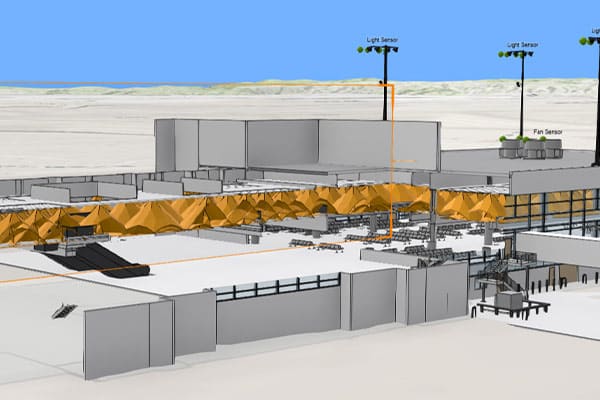
Integration is key to unlocking the full value of digital twins. By connecting systems such as CMMS, GIS, BIM, and IoT platforms, airports can unify data and insights — creating a whole that delivers far greater value than its individual parts. Without this interoperability, digital twins risk becoming isolated systems.
Turning Potential into Performance
Digital twins offer enormous promise, but realizing that promise requires focus and discipline. By prioritizing outcomes, enabling strong governance, leveraging AI, and starting with targeted use cases, airports can move beyond experimentation and achieve real operational impact.
In doing so, they won’t just build smarter models — they’ll build smarter, more resilient airports.