


There are several major challenges to large-scale infrastructure projects in American Samoa, from logistics and skilled-worker shortages to harsh weather and cultural considerations, all of which must be fully integrated into both the design and the overall project strategy.
Travel and Logistics
For the Woolpert team living on the East Coast of the U.S., travel to American Samoa takes roughly 28 hours each way, and flights operate only a few times per week. Because in-person visits are infrequent, the team relies on regular video conferencing and other remote collaboration tools.
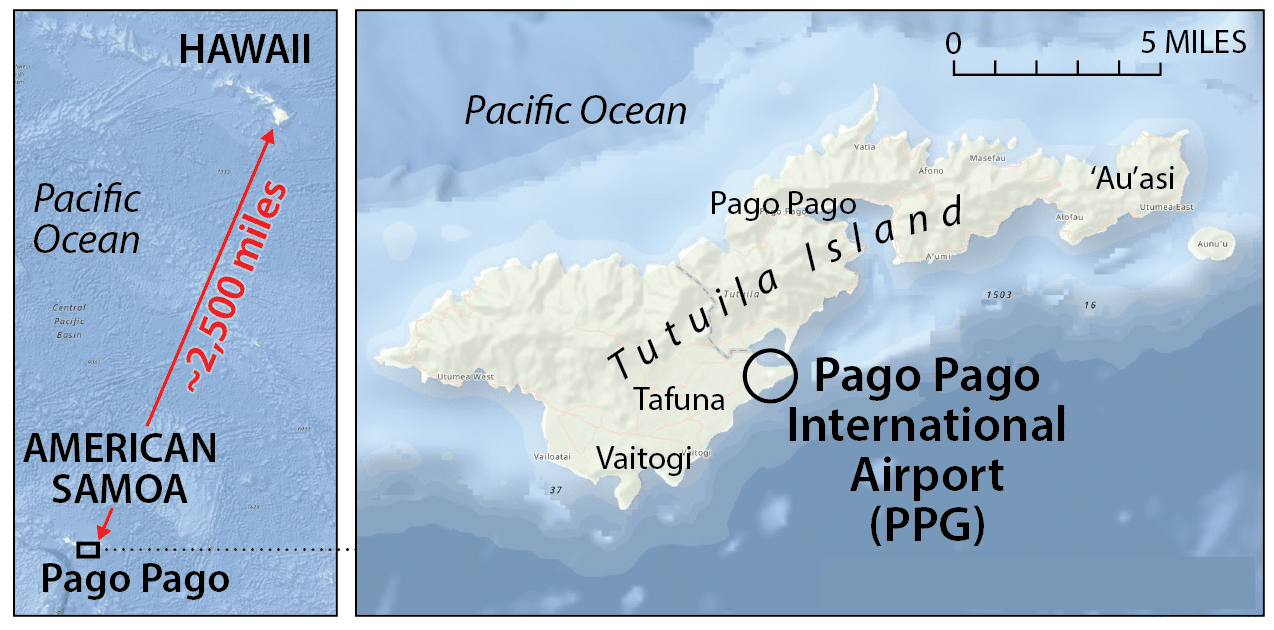
This extreme distance also makes logistics challenging. Materials, equipment, tools, and even basic survey gear must be shipped months in advance. In many cases, the actual construction or rehabilitation work is far simpler than the extensive coordination, planning, shipping, staging, and scheduling required to support it.
These challenges were extremely pronounced during the COVID-19 pandemic, requiring Woolpert to develop flexible and cost-effective solutions amid widespread shipping, labor, and material shortages.
Maintenance and Resilience
From a maintenance standpoint, American Samoa’s isolation means that systems must be extremely resilient. Equipment inevitably fails, and replacement parts often take six to nine months to arrive. In an airport that must meet ADA requirements, it is unacceptable to be without an elevator for nine months. As such, Woolpert designed every major system with built-in contingency plans, redundancies, and “lower-tech” fallback options wherever possible.
The islands also face some of the world’s harshest environmental conditions: severe seismic activity, 236 inches of rain a year, typhoon winds, and a highly corrosive marine climate. These factors make durability, resilience, and ease of maintenance critical priorities for any new infrastructure.
Skilled Labor Shortages
American Samoa has a population of almost 50,000 and is classified by the Environmental Protection Agency as a low-income and disadvantaged community. Less than 20% of residents have any university education, which makes finding skilled labor difficult. Additionally, those residents who do acquire specialized skills often move to the U.S. mainland for better-paying opportunities and do not return.
To address these labor challenges, Woolpert deliberately designed systems, whether baggage claim machinery or mechanical equipment, that allow local staff to keep equipment functioning until specialized technicians can arrive. Woolpert is also working with the American Samoa Government to develop programs that create well-paying jobs and encourage people to stay or come back to the islands.
Lasting Benefits Over Quick Fixes
The improvements to the airfields, including pavement rehabilitation, lighting upgrades, and related studies, will not only enhance operational efficiency but also ensure the runways remain safe, compliant with current FAA standards, and serviceable. These projects were completed cost-effectively without halting airport operations and were designed to support future development.
While the terminal modernization of the PPG airport is still in progress and represents the core of the ongoing work, the benefits will be significant once completed. The primary driver behind the upgrade is that the existing terminal simply does not have the physical capacity to meet modern code requirements, as it predates the Transportation Security Administration, COVID19, and even the ADA.
Since community is at the heart of American Samoa’s culture, Woolpert’s process has included extensive community engagement. The firm has intentionally incorporated cultural values, quality-of-life considerations, sustainability, resilience, and modern technologies into the creation of the new PPG terminal. In particular, Woolpert’s efforts to help create more universal and higher-paying jobs through this program will bring long-lasting value to American Samoa beyond delivering a compliant and fully functioning airport.