
BLOG
—
Scott Cattran Reflects on ElevateAEC 2025 Panel Discussion: The Intersection of AI, Culture, and Strategy
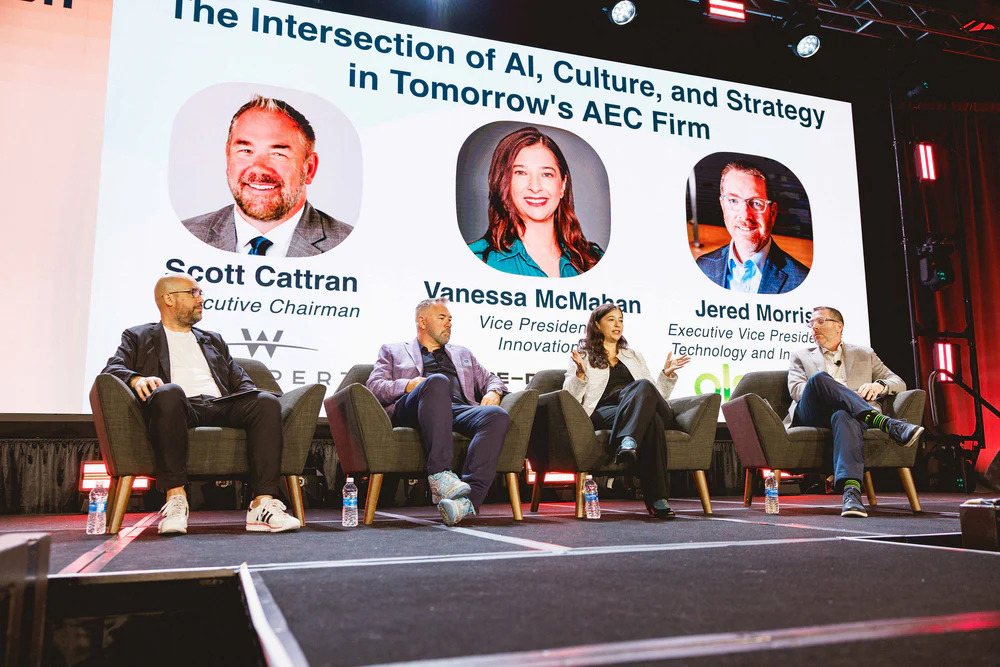
I recently had the opportunity to speak on the Speed of Business Panel at ElevateAEC 2025, titled “The Intersection of AI, Culture, and Strategy.” Together, the panel explored the future of the architecture, engineering, and construction industry, as well as AI strategy in AEC firms—specifically, how these firms are embracing AI, fostering adaptive cultures, and rethinking strategy in real time.
My Main Takeaways: What Does the Intersection of AI, Culture, and Strategy Look Like?
Every AEC firm is trying to wrap its head around AI. We’re all trying to figure out how to shift our focus from the initial phase of cautious testing and security concerns to a stage where innovation is actually happening—and ultimately, to widespread cultural adoption.
People are at the heart of this intersection. Understandably, many are concerned about the possibility of being displaced by AI. How can AEC firms support their people in ways that make them genuinely feel supported? To address this, an effective AI adoption strategy should be built around each employee.
Innovation necessitates a different way of thinking. The speed of AI is faster than anything else we’ve seen. Fostering and enhancing a culture of innovation in AEC firms will require changing people’s mindsets to think differently. How can we train them to be comfortable with change and capable of adapting quickly? Woolpert, for example, offers individual development plans for anyone and everyone in the firm who wants to learn, grow, and advance.
Slow down to speed up. It seems that every time I blink, there is some new AI development. As firms train their teams and leadership to adapt to this speed of change, part of that means teaching them to slow down to carefully assess the best course of action.
Set company values that embrace change. With technologies like AI showing no signs of slowing down, it's essential for firms to prioritize progressive values within their existing frameworks. Our ethos should promote a high tolerance for change, while consistently working toward our overarching goals—enabling creativity, innovation, and achievement.
Establish secure frameworks for AI to proliferate rapidly and responsibly. Employees need a way to easily and securely request AI tools for use. Woolpert has implemented such a framework, which requires supervisor and client approval. This framework also mandates that AI tools demonstrate return on investment to justify continued use. Currently, Woolpert has over 30 AI tools developed securely, with an even larger pipeline of new tools awaiting assessment.
The importance of partnerships. Today, many startups represent the leading edge of AI. Bigger firms should form partnerships with startups to augment areas of need. Often, these startups are specialists occupying a unique AI niche.
Hiring and empowering young professionals. AEC firms must attract this new generation of highly tech-savvy students, empower them to drive innovation, and eventually propel them to positions of leadership. At the same time, firms should implement formal and informal mentorship programs so that all employees can learn and grow together. At Woolpert, many of our AI tools and ideas come from tenured employees who balance their extensive experience in AE projects with progressive technology.
Join the Conversation
In this new paradigm shift characterized by rapid evolution, those who can effectively align culture, strategy, and innovation will advance their firm’s professionals further and faster than we ever thought possible. Whether or not you had the opportunity to attend this ElevateAEC 2025 panel discussion, I’d love to hear your takeaways and thoughts on AI strategy in AEC firms.

Scott Cattran
Scott Cattran is the executive chairman of Woolpert and actively supports the company, the CEO, and the leadership team in matters of strategy, operations, and culture. Previously, Scott served as President and CEO of Woolpert, where he was responsible for setting the company’s vision and strategy, cultivating a strong trust-based culture, achieving long-term strategic goals, meeting annual business objectives, and making Woolpert a Great Place to Work for all employees.